SAKAR - A Trusted Name for Waste Water Solutions

SAKAR - A Trusted Name for Waste Water Solutions
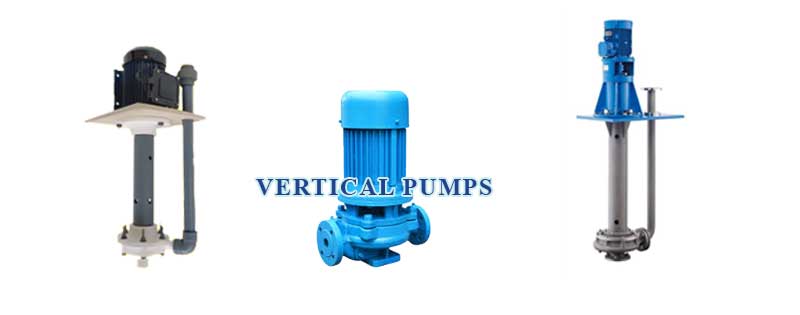
A vertical pump is designed with its motor mounted above and its pump housing positioned below, allowing it to operate efficiently in deep pits, wells, sumps, or tanks where horizontal pumps cannot reach. Its vertical configuration saves floor space, provides excellent priming because the pump end stays submerged, and ensures reliable operation even with fluctuating liquid levels. Vertical pumps offer strong hydraulic performance, high energy efficiency, and easy maintenance because the motor remains dry and accessible. They are also well-suited for handling clean water, wastewater, cooling water, industrial fluids, and agricultural applications, thanks to their durable construction, stable shaft alignment, and ability to withstand high pressures and continuous-duty operation.

Below are the main types of vertical pumps :
Designed for pits or sumps with the pump end submerged and motor above the liquid. Ideal for corrosive, dirty, or industrial wastewater where submersible pumps are unsuitable.
Moves very large volumes of water at low pressure using an axial-flow propeller. Common in flood control, irrigation canals, cooling water intake, and drainage systems.
Used for deep wells and boreholes where high lift and high flow are needed. It uses multiple impeller stages to move water from great depths efficiently.
A compact, space-saving pump installed in a straight pipeline. Common for HVAC, booster systems, and circulating water because it allows easy piping alignment.
Combines centrifugal and axial flow to deliver medium head and high flow. Suitable for irrigation, municipal water transfer, and cooling water applications.
Features several impellers stacked in a vertical column for high pressure output. Often used in high-pressure boosting, RO systems, and industrial process water.
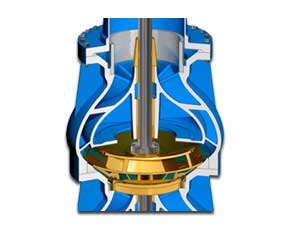
A vertical pump operates by positioning its motor above the pump column while the impeller and suction bowl remain submerged, allowing constant priming and smooth fluid entry. The motor drives a vertical shaft that transfers power downward to the impellers, which add energy to the fluid and push it upward through the column pipe. As the liquid rises, it is discharged at the surface through a head assembly connected to the piping system. This vertical design ensures efficient lifting from deep or narrow sources while saving space and maintaining easy access to the motor for maintenance.
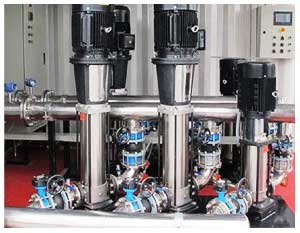
Vertical pumps can be used in Various kind of industries such as